
The End of the Phone Call
Calling the front desk to order a club sandwich at midnight is a relic of the past. Modern guests, accustomed to Uber Eats and DoorDash, expect visual menus with photos, easy customization options, and real-time order tracking. The telephone-based room service model feels outdated — and guests notice.
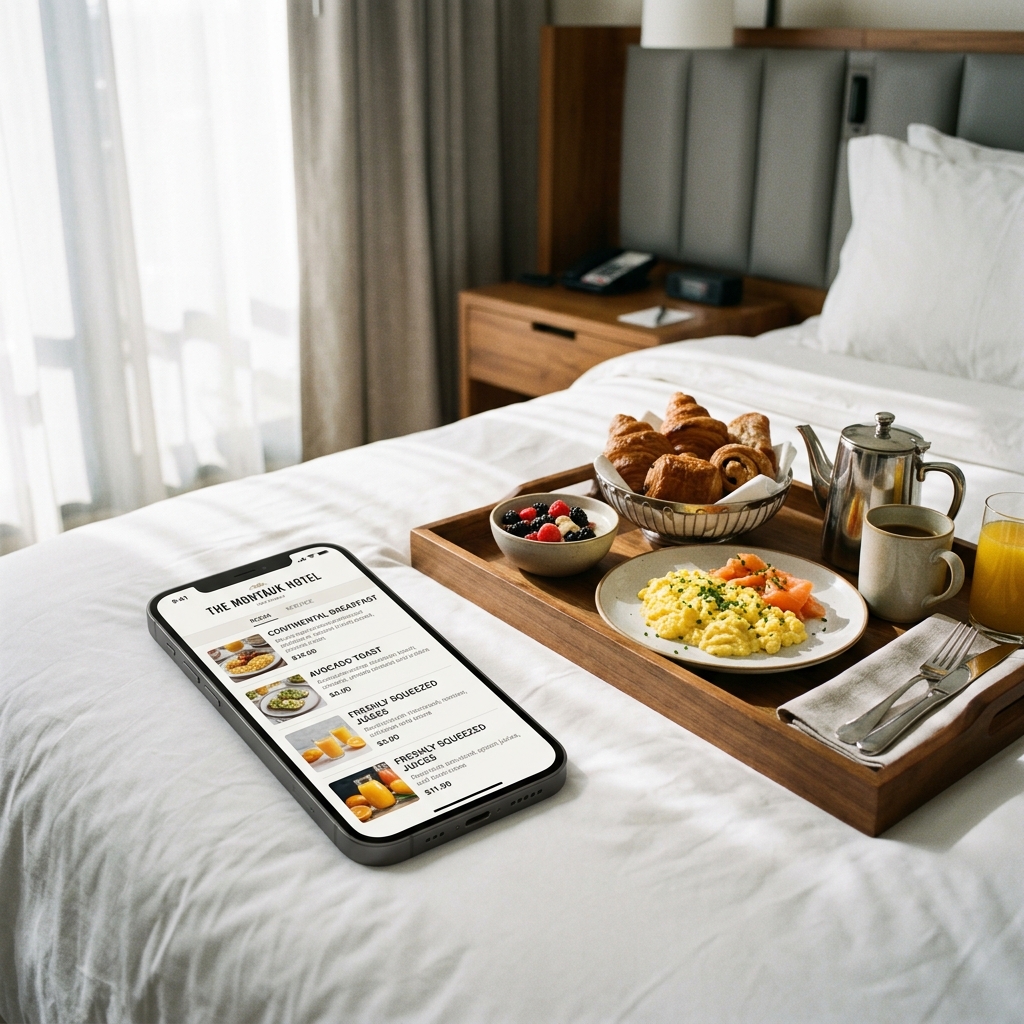
Interactive digital menus accessible via QR codes placed on the nightstand or the TV screen are transforming in-room dining. Guests browse at their own pace, customize orders (extra avocado, no onions, gluten-free bread), and submit with a single tap. No awkward phone conversations, no misheard orders.
Why It Matters for Revenue
Digital ordering platforms inherently increase average order values. By automatically suggesting a side dish, a dessert, or a wine pairing based on the guest's selection, hotels can boost F&B revenue by 20–35% without any additional staff effort. It's the hospitality equivalent of Amazon's 'Customers also bought' feature.
There's also the photography factor. A well-shot image of a wagyu burger with truffle fries sells itself in a way that a plain-text menu line never could. Hotels investing in professional food photography for their digital menus report order increases of up to 40% on featured items.
Operational Benefits
On the kitchen side, digital orders arrive as structured data — not scribbled notes or misheard phone requests. This reduces preparation errors, speeds up service, and allows the kitchen to batch similar orders efficiently. During peak hours, the difference is dramatic.
Inventory management also improves. When you know exactly what's being ordered and when, you can forecast ingredient needs more accurately, reducing both food waste and emergency supplier runs.
The Guest Experience
For guests, the experience feels premium and private. There's no pressure to decide quickly while someone waits on the phone. They can browse the menu in bed, discuss options with their partner, and order whenever they're ready — at 7am for breakfast or at 2am for a midnight snack.
The best implementations also include estimated delivery times, order status notifications, and the ability to rate the experience afterward. This feedback loop helps the kitchen continuously improve quality and timing.
Implementation Tips
Start simple: a well-designed PDF menu accessible via QR code is better than a poorly built interactive app. Once the concept is proven, invest in a purpose-built platform that integrates with your POS system. The ROI typically becomes positive within the first quarter of operation.