
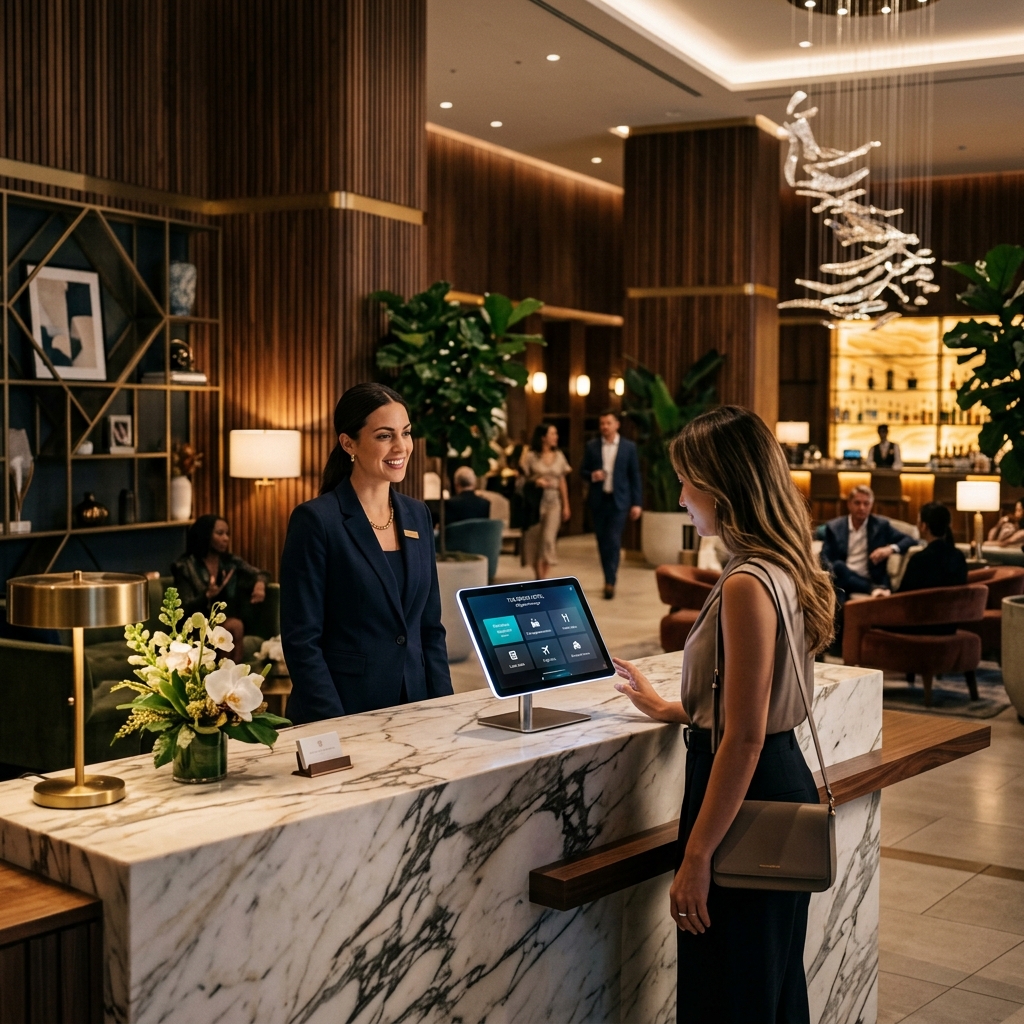
Beyond the Front Desk
For decades, the hotel concierge was the ultimate symbol of luxury hospitality — a knowledgeable local expert who could secure restaurant reservations, arrange theater tickets, and recommend the perfect walking route. Today, artificial intelligence and mobile platforms are democratizing that experience, making personalized recommendations available to every guest, not just those staying in five-star suites.
A digital concierge doesn't just answer questions; it anticipates needs, learns preferences across stays, and provides 24/7 service without the limitations of human shifts, language barriers, or varying levels of local knowledge.
How It Works in Practice
The modern digital concierge typically lives as a chat interface accessible via the hotel's app, a web link, or — most commonly — a QR code in the room. Guests ask natural-language questions like 'Where can I get great sushi nearby?' or 'What time does the pool close?' and receive instant, accurate answers.
The best implementations integrate with local business data, real-time availability, and the property's own services. A guest asking about dinner can see not only restaurant recommendations but also available time slots, walking distances, and even menu highlights — all without leaving the chat.
The Data Advantage
Unlike a human concierge who might remember a returning guest's preferences, a digital system remembers everything. If a guest asked about vegan restaurants during their last stay, the system can proactively suggest plant-based dining options on their return.
Over time, the system also learns property-wide patterns. If 80% of guests ask about breakfast hours within the first hour of check-in, the welcome message can proactively include that information, reducing friction before it even occurs.
Platforms Like VayaPin
What makes solutions like VayaPin particularly powerful is the integration of precise location data. Rather than generic suggestions, guests get exact coordinates that work with any navigation app. No more 'turn left at the church' directions — just seamless, map-integrated recommendations that feel native to the smartphone experience.
For properties in tourist-heavy cities like Bergen, Trondheim, or Lisbon, this geo-aware approach transforms the concierge from an information desk into a genuine local guide — one that's available at 3am just as readily as at noon.
ROI for Properties
Digital concierges reduce front desk call volume by 30–50%, freeing staff to focus on high-value guest interactions. They also serve as a subtle upselling channel: a guest who asks about local activities can be offered the hotel's own spa, rooftop bar, or guided tour package. The result is higher ancillary revenue with zero sales pressure.